
Ransomware actors evolved their post-payment laundering behaviors in 2024 and 2025, likely in response to enforcement and heightened monitoring of high-risk services. Ransomware remains one of the most persistent forms of cybercrime, with attackers encrypting systems or stealing data and demanding crypto payments to restore access or prevent public leaks. While major pyramid and Ponzi schemes operate on a global scale and appear to spread opportunistically across jurisdictions, TRM analysis indicates that several of the largest schemes in 2025 proliferated most strongly in developing markets and economically vulnerable communities. This reflects fraud actors’ continued preference for assets that offer high liquidity, broad exchange acceptance; easy denomination for victims; and frictionless movement across addresses and services. On the inflow side, TRM’s verified fraud dataset showed that stablecoins are the primary vehicle for deposits into fraud schemes, and their share grows meaningfully year over year.
- Once the item is received, the buyer finalizes the purchase by notifying the anonymous online marketplace to release the funds held in escrow (step 11) 8,9.
- Data sharing is not applicable to this article as no new data were created or analyzed in this study.
- TRM Labs identified new iterations of previously observed decentralized investment fraud schemes that re-emerged in 2025, with operators collapsing and reconstituting them with largely identical infrastructure.
- The admin–affiliate split remains opaque on-chain, as it likely takes place only after the funds are deposited into the same global VASP cash-out address.
In recent years, the emergence of the internet has revolutionized the way goods and services are traded, leading to the development of crypto darknet drug shops. These illicit platforms enable users to buy and sell various substances anonymously, using cryptocurrencies as their primary form of payment. This article delves into the functioning, risks, and implications of such underground marketplaces.
Crypto Darknet Drug Shop
The mobile apps provide the ability to transfer details about successful drug orders, and they can also send geographical coordinates of the "package" left by the courier for further pick-up. Typically, the drug shops providing such mobile apps don’t reveal a lot of information, and their customers have substantial prior knowledge about them and their inventory from references or their past experience. Resecurity identified at least 7 underground drug shops providing Android-based mobile apps based on the same engine known as M-Club (CMS) in Dark Web, which may confirm the involvement of the same developer. Around the beginning of Q3 2022, multiple drug shops were identified in the Dark Web providing customers with a customized Android-based mobile app for purchases and secure communications, as well as sending instructions to couriers. Attackers obtained login credentials through infostealer malware, compromising sensitive customer data. In June 2024, data theft attacks targeted customers of the cloud data platform Snowflake, leading to breaches at companies like AT&T, Ticketmaster, and Santander Bank.
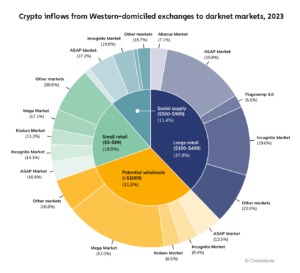
A crypto darknet drug shop operates on the dark web, a hidden part of the internet that requires specific software, such as Tor, to access. Unlike conventional drug markets, these shops provide a level of anonymity that attracts users seeking to bypass legal restrictions. Transactions are facilitated through cryptocurrencies like Bitcoin and Monero, enhancing user privacy and complicating law enforcement efforts.
The Mechanics of Operation
Operating a crypto darknet drug shop requires a sophisticated understanding of technology and security. Sellers typically create accounts on darknet marketplaces, listing their products with detailed descriptions. Buyers browse these listings and can communicate with sellers through encrypted channels. Upon making a purchase, payment is typically made in cryptocurrency, which undergoes a process known as “mixing” to obfuscate the transaction source.
Risks Involved
While the allure of a crypto darknet drug shop may be strong, significant risks accompany these transactions. First and foremost, there is the danger of fraud—many buyers have fallen victim to scams, receiving counterfeit substances or no products at all. Furthermore, law enforcement agencies actively monitor these platforms, leading to arrests and prosecutions of both buyers and sellers. Additionally, the lack of regulation means that the quality and purity of purchased substances can be highly questionable, posing severe health risks.
The Legal Landscape
- The other emerging issue is that current policing efforts treat dark web markets as the core threat, which might miss the wider landscape of digital harms.
- Approximately 34% of A7A5’s trading volume was likely artificially inflated through wash trading — including rapid, circular transfers consistent with automated behavior — according to TRM analysis.
- Mellow was a short-lived darknet marketplace that operated from late 2022 into 2023 before shutting down via a voluntary exit.
- The United States Department of Justice has completed the forfeiture of more than $400 million in cryptocurrency and other assets linked to Helix, an early darknet crypto mixing service.
- Whilst a great many products are sold, drugs dominate the numbers of listings, with the drugs including cannabis, MDMA, modafinil, LSD, cocaine, and designer drugs.
- The principal tradeoff is the exclusion of some peer-to-peer and personal wallet activity that does not interact with identifiable services.
In many countries, engaging with a crypto darknet drug shop is illegal and can lead to serious consequences, including imprisonment. Global efforts to combat drug trafficking have intensified, with many governments implementing stricter regulations aimed at deterring online drug sales. As such, individuals involved in these activities face not only legal repercussions but also risks to their personal safety, given the violent nature of some drug-related conflicts.
Impact on Society
The rise of crypto darknet drug shops has wider societal implications, contributing to the ongoing opioid crisis and other public health challenges. The accessibility of drugs online has made it easier for users to obtain substances, exacerbating addiction problems. Moreover, the inability to trace transactions complicates efforts to understand and mitigate the drug trade's impact on communities.
Conclusion
In summary, the phenomenon of a crypto darknet drug shop highlights the complexities of the modern drug trade, driven by technological advancements and a desire for anonymity. While these platforms may seem appealing to some, the inherent risks and the potential for serious legal and health consequences cannot be overlooked. As society grapples with these challenges, it is essential to foster discussions about regulation, education, and harm reduction strategies to address the issues arising from this clandestine market.