"We acknowledge the concern around investments," Citi analysts wrote. Analysts from JPMorgan, Citi, and Wedbush lifted their price targets following Wednesday's earnings report, given what they viewed as strong signals of AI demand. With Thursday's move, Alphabet shed some $170 billion of its market value, pulling its market capitalization back below $4 trillion. Alphabet (GOOGL) shares slumped Thursday after the Google and YouTube parent laid out massive spending plans to support its AI ambitions. "The labor market spent much of 2025 bending, but not breaking—and ended the year perilously close to a definitive breaking point," Cory Stahle, senior economist at job site Indeed, wrote in a commentary. The indicators were unmistakable signs that the job market is being dragged down by President Donald Trump's tariffs, the immigration crackdown, and to a lesser extent, the rise of AI software.
The emergence of Bitcoin has revolutionized various sectors, with the drugs market being one of the most affected. This cryptocurrency offers a level of anonymity and ease of transaction that traditional currencies do not, leading to an increase in illegal drug sales online. As more people turn to the dark web to purchase substances, the use of Bitcoin has become a significant factor in the accessibility and proliferation of these goods. This article explores the dynamics of the Bitcoin drugs market and its implications for society.
Bitcoin Drugs Market
- As CNBC's Ashley Capoot reports, Anthropic's ad released this week takes a swipe at OpenAI's decision to begin testing ads on ChatGPT.
- Galaxy’s stock traded lower following the earnings release, reflecting investor concern about the broader bitcoin price and crypto downturn.
- Quantum computing has been brought up by notable investors, such as Ray Dalio and Jan Van Eck, as a key area of concern for Bitcoin’s security, and researchers from crypto firm Grayscale recently pointed to this issue as a reason for the recent underperformance.
- He does not invest client assets in bitcoin, but said about half of his clients have exposure through either a brokerage account or crypto wallet.
- Investors appeared wary of the company's plan to shell out $200 billion in capital expenditures this year, focused mainly on data centers.
- Bitcoin is oftentimes referred to as “digital gold” due to the view that it could potentially act as a safe haven asset in times of geopolitical uncertainty, much like the role its analog counterpart has had for thousands of years.
Bitcoin price was trading above $71,400 at the time of publication, stabilizing after days of extreme volatility that rattled both crypto and broader financial markets. But prices skyrocketed in the final months of the year when tech stocks wobbled and investors, hungry for gains, chased momentum in metals markets. The bitcoin price slid to $69,000 in Asian trading Thursday as a deepening selloff in global markets spilled into crypto markets. The bitcoin price crashed to $69,000 in trading Thursday as a deepening selloff in global markets spilled into crypto markets. Recent trading data showed Bitcoin price slipping through key technical support levels, driving forced liquidations across derivatives markets and intensifying downside price pressure. Adding to all this, ProCap Financial CIO Jeff Park suggested bitcoin price’s next major bull-market catalyst may not come from Federal Reserve rate cuts — but from bitcoin’s ability to rise even in a tightening environment.
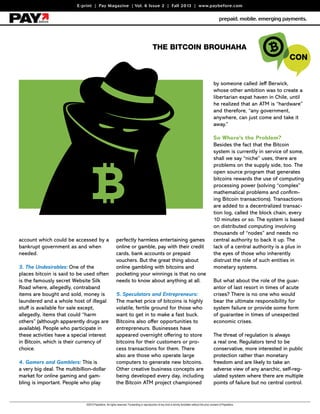
The Bitcoin drugs market primarily operates on the dark web, where users can buy and sell illegal substances without the oversight of law enforcement. Online marketplaces, such as Silk Road (which was shut down in 2013), paved the way for the proliferation of drugs traded using Bitcoin. These platforms allow users to set up anonymous profiles, making it difficult for authorities to trace transactions.
How Transactions Work
In the Bitcoin drugs market, transactions are secured using blockchain technology, which provides a distributed ledger that records all exchanges without revealing personal identities. Buyers and sellers utilize Bitcoin to maintain their privacy. This method has become particularly attractive to those looking to evade law enforcement and enjoy greater freedom in their purchasing decisions. As such, this market has seen a growing number of vendors selling a variety of illegal substances.
- The cosmetics company reported second-quarter results Thursday that sent investors running—and the stock to its lowest close since December—despite results that beat expectations and an improved outlook for the year.
- Additionally, the death of bitcoin’s digital gold narrative has been grossly exaggerated in the past, perhaps most notably in the aftermath of the March 2020 COVID crash.
- In terms of reasons for Bitcoin’s recent struggles, there has been a lot of discussion around its relative underperformance when compared to gold amidst various signs of global economic tension, as was seen during the contention around the status of Greenland.
- Bitcoin’s price crashed sharply on Thursday, sliding through critical support and dipping near $66,000 in volatile trading.
- Financial advisors typically recommend that bitcoin and other digital assets be limited to a very small share of your portfolio.
The Risks Involved
Despite its advantages, participating in the Bitcoin drugs market comes with significant risks. Buyers may receive counterfeit or low-quality products, leading to potential health hazards. Additionally, while transactions are anonymous, there are still methods law enforcement agencies employ to track illegal activities. Recent investigations have revealed how forensic analysis of blockchain transactions can sometimes uncover the identities behind the digital wallets.
Impact on Society
The increasing presence of Bitcoin in the drugs market raises serious questions about public health and safety. The ease with which individuals, including minors, can access illegal substances online poses a challenge to traditional drug enforcement efforts. Communities are grappling with the consequences of drug abuse, which can have lasting impacts on families, economies, and social structures.
Regulatory Responses
Governments globally are beginning to recognize the implications of the Bitcoin drugs market and are taking steps to address the issue. Regulatory measures include increased monitoring of blockchain transactions, harsher penalties for those caught buying or selling drugs online, and public awareness campaigns aimed at educating potential users about the dangers of the Bitcoin drug market.
Conclusion
The intersection of Bitcoin and the drugs market illustrates the complex challenges posed by cryptocurrency in today’s digital age. While it provides opportunities for anonymity and ease of access, it simultaneously raises serious concerns regarding health, safety, and legality. The fight against illegal drug trade will continue to evolve alongside these technologies, requiring a coordinated response from law enforcement, policymakers, and communities.